Threats and conservation of Box Jellyfish
Global warming is a threat to Box jellyfish. The place they live in is too polluted and this affects them causing them to move to other places that might not suit them.
We have to reduce the amount of pollutions so that the Box jellyfish, as well as other marines, will not be threaten.
Monday, 19 May 2014

Conservation and Threats of Fire Corals
Conservation and threats of fire corals
Fire corals face the many threats impacting coral reefs globally, including poor land management practices releasing more sediment, nutrients, and pollutants into the oceans and stressing the fragile reef ecosystem.
Overfishing has ‘knock-on’ effects and fishing using destructive methods physically devastates the reef. A further potential threat is the increase of coral bleaching events, as a result of global climate change.
Most fire coral species have brittle skeletons that can easily be broken, for example, during storms, or by divers when diving for leisure, or when collecting fish for the aquarium trade. For instance, the yellowtail damselfish (Chrysiptera parasema) tends to dwell close to the branching fire coral colonies, and retreats into its branches when threatened. In Brazil, fire coral colonies are extensively damaged when harvesting the yellowtail damselfish, as the corals are often deliberately smashed and fishes hiding among the branches are ‘shaken out’ into plastic bags.
Fire corals face the many threats impacting coral reefs globally, including poor land management practices releasing more sediment, nutrients, and pollutants into the oceans and stressing the fragile reef ecosystem.
Overfishing has ‘knock-on’ effects and fishing using destructive methods physically devastates the reef. A further potential threat is the increase of coral bleaching events, as a result of global climate change.
Most fire coral species have brittle skeletons that can easily be broken, for example, during storms, or by divers when diving for leisure, or when collecting fish for the aquarium trade. For instance, the yellowtail damselfish (Chrysiptera parasema) tends to dwell close to the branching fire coral colonies, and retreats into its branches when threatened. In Brazil, fire coral colonies are extensively damaged when harvesting the yellowtail damselfish, as the corals are often deliberately smashed and fishes hiding among the branches are ‘shaken out’ into plastic bags.
Sunday, 18 May 2014
conservation and threats
The following introduce some of the ways we take forward our understanding and activities in support of the conservation and enhancement of the natural environment.
- Designations , areas under long term protection for their national significance/value in conserving species, habitats, geology and/or landscape) and not pollute the sea so as to not make the sa pens lose their habitat and also prevent Areas of stable muddy seabed, where animals burrow below and sea pens protrude from the surface.
Friday, 28 March 2014
Box Jellyfish
In Hawaii, box jellyfish numbers peak approximately 7 to 10 days after a full moon, when they come near the shore to spawn. Sometimes the influx is so severe that lifeguards have closed infested beaches, such as Hanauma Bay, until the numbers subside.
In Hawaii, box jellyfish numbers peak approximately 7 to 10 days after a full moon, when they come near the shore to spawn. Sometimes the influx is so severe that lifeguards have closed infested beaches, such as Hanauma Bay, until the numbers subside.


Wednesday, 26 March 2014
sea pens
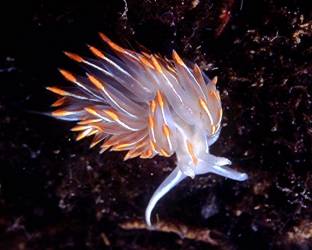 |
| when it is touched |
 |
| a sea pen |
SEA PENS
description
-sea pens are named after their feather like appearance. sea pens are a colonial animals with multiple polyps . Each with eight tentacles . Sea pens vary in colour from white to creamy yellow.
kingdom
-animals
plylum
-cnidara
Life span
- Seapens have a life spam of up to 15 years
Diet
-Seapens feeds on small zooplankton organisms
Interesting facts
1) When they are touched or provoked they actually glow , giving off a bright light . This is also known as bioluminsceues
2) Seapens are able to change their loacation . They usually change their location to move themselves in the direction of the current flow in order to ensure a steady source of plankton( source of food)
Importance in ecosystem
- Without the seapens survivial the eco system of the seapens food web will cause an unbalance and affect the entire ecosystem。
Food Chain
planktons ->sea pens ->Sea stars -> sea turtle -> sharks
Habitat
- They live in very fine sendiments (muddy sand to fine sand) and are usually found in sheltered inshore waters or deep water inshore. From a dept of 12-400m
 |
| sea pens along the current flow |
Subscribe to:
Posts (Atom)