Box Jellyfish
In Hawaii, box jellyfish numbers peak approximately 7 to 10 days after a full moon, when they come near the shore to spawn. Sometimes the influx is so severe that lifeguards have closed infested beaches, such as Hanauma Bay, until the numbers subside.
Friday, 28 March 2014


Wednesday, 26 March 2014
sea pens
 |
| when it is touched |
 |
| a sea pen |
SEA PENS
description
-sea pens are named after their feather like appearance. sea pens are a colonial animals with multiple polyps . Each with eight tentacles . Sea pens vary in colour from white to creamy yellow.
kingdom
-animals
plylum
-cnidara
Life span
- Seapens have a life spam of up to 15 years
Diet
-Seapens feeds on small zooplankton organisms
Interesting facts
1) When they are touched or provoked they actually glow , giving off a bright light . This is also known as bioluminsceues
2) Seapens are able to change their loacation . They usually change their location to move themselves in the direction of the current flow in order to ensure a steady source of plankton( source of food)
Importance in ecosystem
- Without the seapens survivial the eco system of the seapens food web will cause an unbalance and affect the entire ecosystem。
Food Chain
planktons ->sea pens ->Sea stars -> sea turtle -> sharks
Habitat
- They live in very fine sendiments (muddy sand to fine sand) and are usually found in sheltered inshore waters or deep water inshore. From a dept of 12-400m
 |
| sea pens along the current flow |
Monday, 24 March 2014
FIRE CORAL
Description: Fire corals are colonial marine organisms that look rather like real coral. Technically,they are not corals, since they are more closely related to hydra and other hydrozoans.
Kingdom: Animalia
Phylum: Cnidaria
Life span: They live for centuries and centuries!!!
Diet: They feed on zooplanktons,tiny animals and phytoplanktons or tiny plants that drift on ocean currents.
Interesting Facts: (1) Fire corals take on a variety of different shapes ranging from lacy branches to plate-like structures, to crusts that can cover other things growing on the reef, such as sea fans. (2) They are called fire corals because of their powerful stinging hairs or nematocysts. At first, these stinging hairs are only used to defend fishes like parrotfish which would nibble the corals. However, they were strong enough to injure divers who brush their skin against them, causing them to feel burn and itchy.
Importance in Ecosystem: They are able to lay down a calcareous skeleton like those of the scleractinian corals. This ability makes the fire corals the second most important reef builder in the reef ecosystem.
Food Chain: Phytoplankton -> Zooplankton -> Fire Coral -> Parrotfish
Habitat: Fire corals live in Caribbean reefs. More specifially, they occupy shallow coral reefs, where they cover many different substrates. The fire corals can also be found throughout the reef system in Bermuda.


Kingdom: Animalia
Phylum: Cnidaria
Life span: They live for centuries and centuries!!!
Diet: They feed on zooplanktons,tiny animals and phytoplanktons or tiny plants that drift on ocean currents.
Interesting Facts: (1) Fire corals take on a variety of different shapes ranging from lacy branches to plate-like structures, to crusts that can cover other things growing on the reef, such as sea fans. (2) They are called fire corals because of their powerful stinging hairs or nematocysts. At first, these stinging hairs are only used to defend fishes like parrotfish which would nibble the corals. However, they were strong enough to injure divers who brush their skin against them, causing them to feel burn and itchy.
Importance in Ecosystem: They are able to lay down a calcareous skeleton like those of the scleractinian corals. This ability makes the fire corals the second most important reef builder in the reef ecosystem.
Food Chain: Phytoplankton -> Zooplankton -> Fire Coral -> Parrotfish
Habitat: Fire corals live in Caribbean reefs. More specifially, they occupy shallow coral reefs, where they cover many different substrates. The fire corals can also be found throughout the reef system in Bermuda.
Friday, 21 March 2014
HYDRA
DESCRIPTION
Hydra is a genus of tiny freshwater polyps.
Hydra have tentacles around their body opening and the
body opening is for consuming food
and disposing waste.
Kingdom: Animalia
Phylum: Cnidaria
Lifespan: Hydra do not seem to age or die of old age
Diet: Hydra are carnivorous and feed on anything they catch with their tentacles example small crustaceans,worms,insects or anything small.
Phylum: Cnidaria
Lifespan: Hydra do not seem to age or die of old age
Diet: Hydra are carnivorous and feed on anything they catch with their tentacles example small crustaceans,worms,insects or anything small.
IMPORTANCE IN ECOSYSTEM
Hydra are very useful in ecotoxicology and
can help detect any chemical
substances.
FOOD CHAIN
Small crustaceans->Hydra->Flatworms
HABITAT
They can be found in lakes,pond and
freshwater.When a hydra is growing,it attach
itself to the bottom of the pond or a water
plant.
Wednesday, 19 March 2014
SEA ANEMONE
Description
The sea anemone is considered the flower of the sea. Although they look like plants, they are actually carnivorous. Sea anemones come in different sizes and colours.
Kingdom: Animalia
Phylum: Cnidaria
Lifespan: Sea Anemones do not age, so they could live indefinitely. However they fall prey to their predators before this happens. Their average lifespan 60-80 years.
Diet: Fish, mussels, small crustaceans, etc.
Importance in Ecosystem
Sea anemones have a mutual relationship with some fishesSea anemones protect clownfish by allowing them to live in their tentacles. Clownfishes in return helps to chase away its predators.
Food Chain
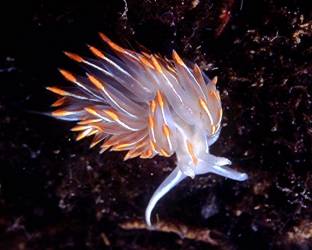
Small Crustaceans -> Sea Anemones -> Sea Slugs
Habitats
They are usually found in rock pools, hiding under rocks and in the sand.
Box jellyfish
Box jellyfish are distinguished by their cube-shape. The box jellyfish is the most poisonous creature in the world and extremely feared wherever the jellyfish floats.
Kingdom: Animalia
Phylum: Cnidaria
Lifespan: Less than 1 year
Diet: Shrimp, planktons, small fishes and other jellyfish
Importance in Ecosystem
They protect some species of fish that are not yet able to defend themselves. The fishes hide from predators by using jellyfish tentacles as a shield.
Food Chain
Plants -> Small Fishes -> Box Jellyfish ->Crabs (blue swimmer crab)
Habitat
They are mainly found in the ocean but are also found in land in freshwater rivers and mangrove channels during spawning. During heavy storms, they wobble into deeper waters where the water is calm to prevent damage. Box jellyfish also inhabit shallow rivers during the reproductive season and during their polyp stage. When young jellyfish mature into medusa, they follow the river out to sea.
Subscribe to:
Posts (Atom)